


The Tribez: Build a Village
4.5137.48K Reviews
App Specs
- Version
- 19.5.0
- Updated On
- License
- Free
- Downloads
- 10,000,000+
- Developer
- Game Insight
- Categories
- Simulation
- Platform
- Android
Screenshots


 Analysis by AppCompare
I enjoy village-building games most when they give me a gentle routine rather than a pile of chores, and The Tribez: Build a Village works best in that unhurried space. It is a free simulation game from Game Insight, set in a prehistoric community where construction, resource gathering, and quests all feed into the same long-term project. Its age rating is Everyone, but its slow, incremental rhythm is the more important thing to know: this suits players who like checking in, making a few decisions, and coming back later more than anyone looking for constant action.
A steady routine beats rushing
My most useful habit is to decide what I want from a short session before tapping around. If I am focused on a building goal, I check what it needs, then collect or start the tasks that move me toward it. If I am following a quest, I keep that objective in view rather than spending resources on every tempting upgrade. This sounds simple, but it helps the village feel like a plan instead of a list of unrelated errands.
A realistic way to play is to open the game during a break, collect what is ready, queue a sensible next step, and leave. Later, I can return when I have time to make a larger layout decision or work through a quest. That stop-and-start pattern suits a simulation better than trying to force a long session out of every visit. I would not treat it as a game that must be completed quickly; the satisfaction comes from seeing small choices accumulate.
What to check before settling in
The game has been available since October 11, 2012, and its current version is 19.1.0. On Android, the listed minimum operating system is 7.0. Those details matter if you are deciding whether an older device can run it, while the free entry price makes it easy to try before committing to its particular pace. The game has a 4.4 average from around 2.2 million ratings, and more than 10 million installs, so it has clearly reached a broad audience without that popularity guaranteeing it will match every player’s taste.
I also recommend checking the purchase prompts and your own spending preferences early. Optional in-app purchases range from $0.25 to $149.99 per item, a wide span that makes it worth deciding in advance whether you are playing entirely for free. I found it easier to enjoy gradual progress when I treated purchases as an optional shortcut, not as the expected way to advance. If you share a device with a child, it is sensible to review purchase controls before handing it over; the Everyone rating describes the game’s age suitability, not a spending plan.
Small habits that make the village easier to manage
Rather than scattering effort across several goals, I get more out of choosing one near-term priority: a quest, a resource need, or a building I want to place. That gives each collection and construction choice a purpose. When I do want to experiment with the layout, I separate that creative session from resource planning, so a rearrangement does not distract me from the task I meant to finish. The useful trade-off is that tidy planning feels efficient, while spontaneous building is more playful; I switch between them depending on whether I want progress or a relaxed visit.
It also helps to think of the village as a set of connected needs, not just a pretty map. A new structure may look like the obvious next step, but I pause to consider whether it supports the objective I am following and whether I would rather keep resources available for another requirement. This avoids the familiar simulation-game frustration of spending first and then realizing a quest needed the same materials. I would not claim there is one perfect layout; the best arrangement is the one that makes your own priorities easy to follow.
Worth Reading Before You Choose

EA SPORTS FC Mobile 26 Is a Bigger Football Game, but It Takes Time

Flipboard Shows What News Apps Must Do Beyond the Feed

Switching to Android Auto Means Rethinking Your Driving Routine

Google Calendar Makes a Crowded Week Easier to Manage

Ludo King Makes the Most of the Minutes Between Plans

Baby Panda World Brings Quick Play to Modern Phones, but Its Game Library Feels Busy
Where its style differs from other simulation games
Compared with a tightly competitive management game, this one is more about gradual growth and an inviting prehistoric setting than constant pressure to optimize every move. Compared with a pure decorating sandbox, it gives construction a practical role through resources and quests, so the village is not only a canvas. That blend is the main reason I would recommend it to someone who enjoys both making a place their own and having small objectives to guide the next session.
The compromise is that a player who wants immediate control over every outcome may find the measured pace limiting. Resource-led progress and ongoing goals can make the game feel like something to tend rather than a challenge to finish in one sitting. If your favorite part of the genre is unrestricted design, a simpler creative builder may suit you better; if you want fast decisions and direct competition, a more action-oriented strategy game is a clearer fit.
Welcome to Your New World
From the moment you start playing The Tribez: Build a Village, you’re transported to a prehistoric era where you become the chief of your own tribe. The game kicks off with a simple tutorial that guides you through the basics, making it easy for anyone to get the hang of things quickly. You’ll start by constructing simple buildings and gradually expand your village into a bustling community.
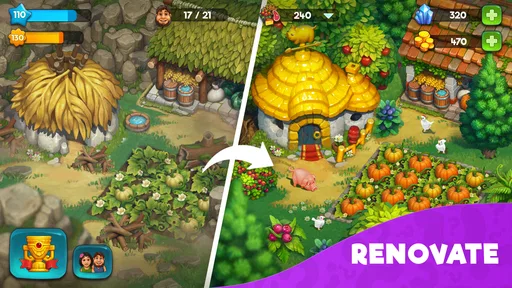
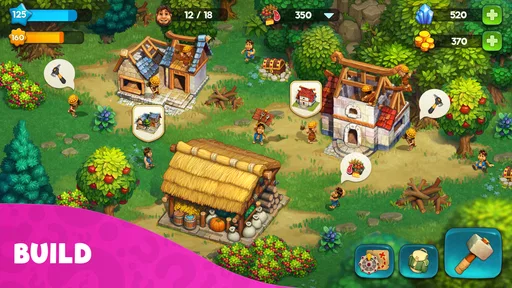
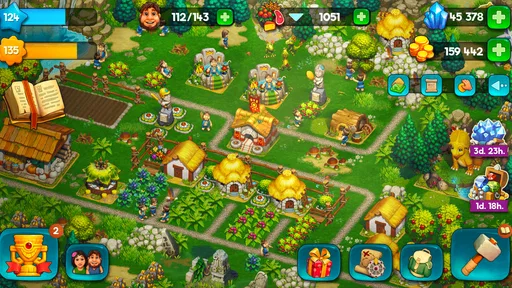
The graphics are vivid and colorful, with charming character designs that really bring the game to life. It's not just about building and managing resources; it’s about creating a thriving village that feels alive. The attention to detail in the environment and animations adds to the immersive experience.
Building and Expanding
Construction is the core of the game. You start with basic huts and gradually unlock more complex structures like farms, workshops, and even cultural buildings that contribute to your tribe’s happiness. Developing your village requires strategic planning as you balance resources such as wood, stone, and food.
One of the aspects I love is the ability to customize your village layout. It’s like having a sandbox where you can let your creativity shine. There’s something incredibly satisfying about seeing your village grow from a few scattered huts to a thriving metropolis.
Quests and Adventures
The game is packed with quests and missions that keep you engaged. These quests are not only a great way to earn rewards but also add depth to the storyline. You’ll find yourself exploring mysterious islands, discovering ancient secrets, and even encountering some intriguing characters along the way.
Quests often require you to gather resources or complete certain tasks, which adds an exciting layer of challenge. The sense of achievement when you complete a quest is a great motivator to keep playing.
Community and Social Features
In today’s gaming world, social interaction is key, and The Tribez: Build a Village doesn’t disappoint. You can connect with friends, visit their villages, and even trade resources. This social aspect adds a competitive edge as you compare your village’s growth with other players. It’s always fun to see what creative layouts others have come up with.
The game also hosts events and competitions, which are a fantastic way to earn exclusive rewards and show off your village-building skills. Participating in these events keeps the game fresh and exciting.
In-App Purchases and Monetization
Now, let's talk about something we all have mixed feelings about: in-app purchases. Yes, The Tribez: Build a Village offers in-app purchases, but they’re not intrusive. You can enjoy the game without spending a dime, though buying resources can speed up your progress. It’s entirely up to you how you want to play it.
If you’re patient and enjoy the journey of gradually building your village, you’ll find plenty to do without opening your wallet. However, if you’re in a rush to see your village flourish, the option to purchase resources is there.
Choosing the right kind of player
I think this is a good pick for someone who likes a gentle project to return to: a player who enjoys watching a place take shape, making practical choices, and having quests point toward the next goal. It can also work well as a low-pressure shared interest with family members, since the setting is approachable and the village gives people something visual to discuss. I would still set expectations clearly if a child is playing: purchases are available, and steady progress is a better fit than expecting every goal to be completed immediately.
I would skip it if waiting between goals irritates you, if you dislike juggling materials, or if you want a game that rewards quick reflexes and constant interaction. Its appeal depends on being comfortable with a village that develops over time. The most helpful question to ask yourself is not whether you like building in general, but whether you enjoy returning to the same community and nudging it forward in small steps.
How I keep the experience comfortable
Before settling into a longer run, I take a moment to check the device’s sound and notification settings rather than assuming the game should interrupt my day. I keep alerts only if they help me remember a goal I genuinely care about; otherwise, I prefer opening the game when I choose. These are ordinary device-level choices, not a special game feature, but they make a noticeable difference when a long-running simulation is part of a daily routine.
For a focused session, I use a simple sequence: review the current objective, collect what is ready, start the most useful task, and then decide whether I have time for exploration or layout changes. The order matters because browsing first can tempt me into spending materials without a clear reason. On a relaxed day, I reverse that approach and treat the village as a place to wander around and decorate. Neither style is wrong; separating them just makes the game feel less scattered.
Limits worth understanding before you commit
Despite the charming presentation, this is still a resource-management game, and that can make progress feel repetitive if you want every session to introduce a new kind of challenge. Quests give direction, but they also ask you to complete practical tasks, so players who dislike recurring collection and construction loops may tire of the structure. I see that as a genuine limitation rather than a flaw that can be solved by spending: buying a shortcut may reduce waiting, but it does not change the basic style of play.
The social side is best treated as an optional extra, not the sole reason to install it. Visiting friends’ villages can provide inspiration and a point of comparison, but someone who wants deep, tightly coordinated multiplayer should look elsewhere. Likewise, if your main goal is elaborate freeform design, the need to balance a layout with resources and objectives can feel like a constraint. I enjoy that tension, but it is exactly where tastes differ.
My view after weighing the trade-offs
Game Insight’s village builder has been around since October 11, 2012, and its current version is 19.1.0; on Android, it requires version 7.0 or later. It is free to start, rated Everyone, and has built a large audience, but those facts are less useful than knowing its personality: colorful, quest-led, and happiest when played at a patient pace. I would recommend it to a friend who wants a small ongoing project rather than a demanding strategy test.
My practical advice is to begin without buying anything, choose one goal at a time, and see whether the cycle of collecting, building, and exploring feels satisfying to you. If it does, the village offers room to grow and plenty of reasons to return. If you find yourself wishing it moved faster or offered unrestricted design, trust that reaction instead of trying to force the fit. For the right player, the pleasure is not reaching a perfect endpoint; it is making the next thoughtful improvement and watching the community become more fully yours.
Pros
- Engaging storyline with immersive quests.
- Vibrant graphics and detailed animations.
- Regular updates with new content.
- Easy to learn
- hard to master mechanics.
- Offline play available for convenience.
Cons
- In-app purchases can be pricey.
- Progress can be slow without spending.
- Requires significant storage space.
- Occasional connectivity issues.
- Some ads can be intrusive.
FAQs for The Tribez: Build a Village
What is the main objective of The Tribez: Build a Village?
The main objective of The Tribez: Build a Village is to develop and expand your prehistoric village by constructing buildings, harvesting resources, and managing your tribe. Players must complete quests and challenges to unlock new areas and features, allowing them to grow their civilization and explore a vast, immersive world.
Is The Tribez: Build a Village free to play?
The Tribez: Build a Village is free to download and play, but it includes in-app purchases. These purchases can enhance gameplay by speeding up progress or unlocking additional content. However, players can enjoy the game without spending money, though progress might be slower without these optional purchases.
What type of gameplay can I expect from The Tribez: Build a Village?
The Tribez: Build a Village offers a blend of city-building and resource management gameplay. Players will engage in constructing various buildings, farming, and gathering resources. The game also involves completing quests and interacting with different tribes and characters, providing a rich narrative and diverse activities to keep players engaged.
Can I play The Tribez: Build a Village offline?
Yes, The Tribez: Build a Village can be played offline, which makes it convenient for players without a constant internet connection. However, some features, such as buying in-game currency or syncing progress across devices, will require an internet connection. Players can enjoy most of the gameplay features offline.
What are the device requirements for The Tribez: Build a Village?
The Tribez: Build a Village is available for both Android and iOS devices. For Android, it requires version 4.4 and up, while iOS devices need iOS 9.0 or later. It's compatible with iPhone, iPad, and iPod touch. Ensure your device meets these requirements for a smooth gaming experience.


